
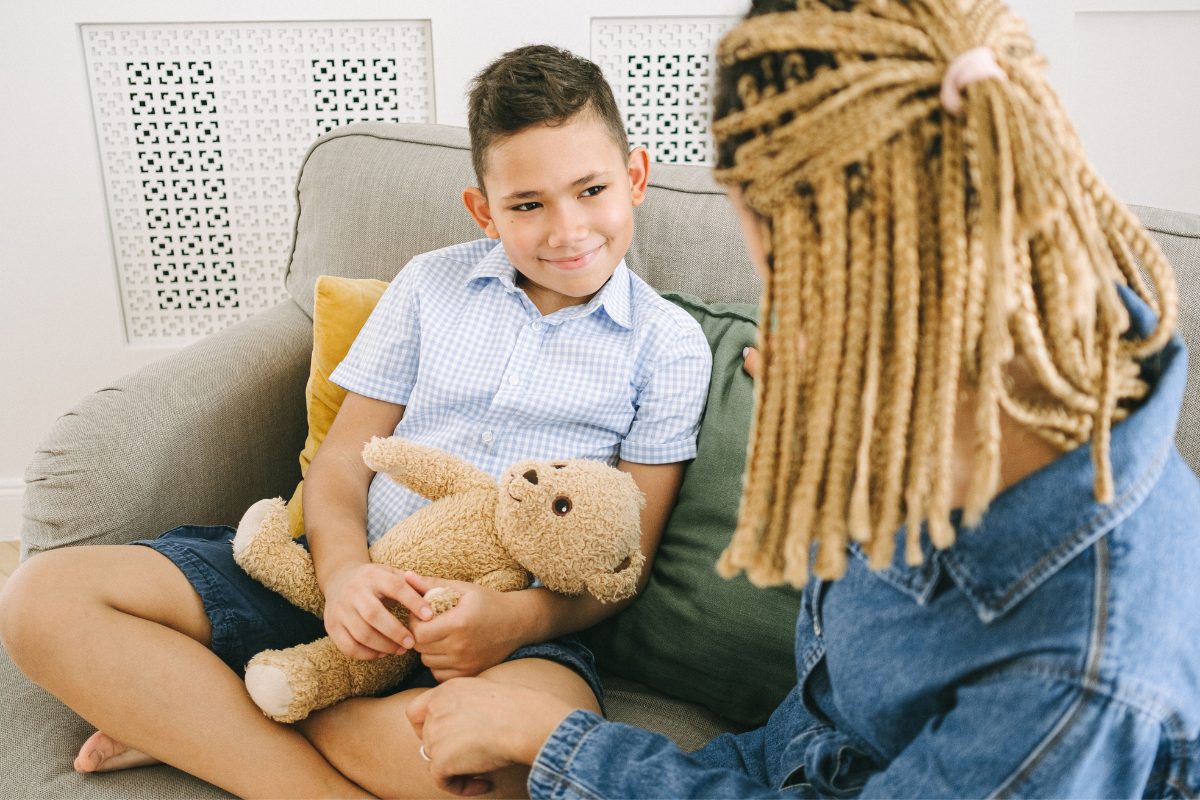
If you have found yourself Googling “signs my child needs counseling,” chances are something in your gut is already whispering, “Something feels different.”
And first, let me say this clearly: wondering if your child needs support does not mean you have failed them. It usually means you are paying attention.
Kids do not always walk into the kitchen and say, “I’m anxious,” “I’m depressed,” or “I don’t know how to cope.” More often, their pain shows up through behavior, sleep, irritability, stomachaches, school refusal, big emotions, or quiet withdrawal.
Counseling can give your child a safe place to sort through what they are feeling, while also giving you practical tools to support them at home.
Table of Contents
- When Child Counseling Might Help
- Emotional Signs Your Child Needs Counseling
- Behavior Changes That May Signal Counseling Support
- Physical Symptoms and School Struggles
- When to Seek Counseling Right Away
- How Counseling Helps Children and Families
- Signs My Child Needs Counseling: Trust Your Gut
When Child Counseling Might Help
Every child has hard days. They melt down, argue, worry, shut down, or act out sometimes because they are human and still developing.
The question is not, “Is my child ever emotional?” The better question is, “Is this becoming frequent, intense, persistent, or disruptive?”
The DSM-5-TR emphasizes that mental health symptoms in children need to be understood within the child’s developmental stage, environment, family context, and level of impairment.1 In plain English, that means we look at whether the struggle is getting in the way of daily life.
Counseling may be helpful if your child’s emotions or behaviors are affecting:
- Home life
- Friendships
- School performance
- Sleep
- Appetite
- Confidence
- Family relationships
- Their ability to enjoy things they used to love

You do not have to wait until things feel unbearable. Early support often helps children build coping skills before patterns become more entrenched.2
Emotional Signs Your Child Needs Counseling
One of the clearest signs your child may need counseling is a noticeable emotional shift that does not seem to pass.
This might look like a child who used to be fairly happy becoming persistently sad, tearful, angry, worried, or overwhelmed. It may also look like a child who suddenly seems numb, disconnected, or “not like themselves.”
Common emotional signs include:
- Frequent crying or sadness
- Excessive worry or fear
- Panic-like symptoms
- Irritability that feels bigger than usual
- Low self-esteem or harsh self-talk
- Frequent guilt or shame
- Hopeless comments
- Difficulty calming down after being upset
Anxiety and depression in children can show up differently than they do in adults. The CDC notes that while fears, worries, and sadness can be normal, persistent or extreme forms of fear or sadness may be signs of anxiety or depression.3
So if your child seems stuck in a feeling, or their emotions are running the whole household, counseling can help.
Ready to take the next steps in your child’s mental health journey?
Behavior Changes That May Signal Counseling Support
Children often communicate distress through behavior before they have the words to explain what is happening internally.
A child who is anxious may become controlling. A child who is sad may become defiant. A child who feels overwhelmed may become clingy, explosive, avoidant, or unusually quiet.
Behavior changes worth paying attention to include:
- Sudden aggression or frequent outbursts
- Withdrawal from friends or family
- Loss of interest in favorite activities
- New separation anxiety
- Increased tantrums or big emotions beyond what is typical for their age
- School refusal
- Perfectionism or fear of making mistakes
- Regressions, such as bedwetting or baby talk
- Lying, stealing, or risky behavior
- Difficulty following rules they used to manage
Of course, one hard week does not automatically mean your child needs therapy. Kids go through phases, transitions, and developmental leaps.
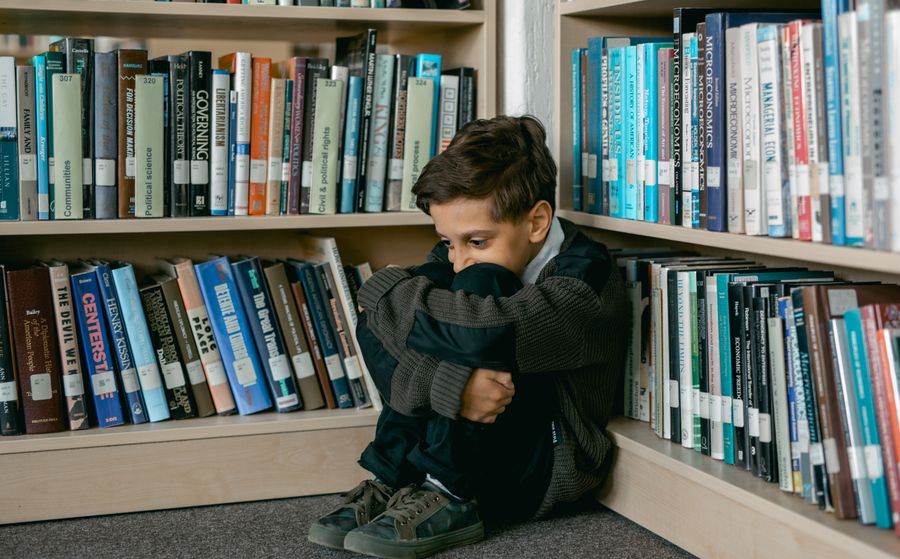
But if the behavior is persistent, escalating, or leaving you feeling like you are walking on eggshells, it may be time to seek child therapy.
If this sounds familiar, contact us today to take the first step toward positive change. You do not have to figure it out alone.
Physical Symptoms and School Struggles
Sometimes the signs your child needs counseling show up in the body.
Children may not say, “I feel emotionally overwhelmed.” They may say, “My stomach hurts,” “I feel sick,” “I can’t sleep,” or “I don’t want to go to school.”
Stress and emotional distress can show up as:
- Frequent stomachaches or headaches
- Sleep problems
- Nightmares
- Appetite changes
- Fatigue
- Restlessness
- Trouble concentrating
- Frequent visits to the school nurse
School can also become a major clue. You may notice slipping grades, missing assignments, behavior reports, social struggles, or a child who suddenly hates going to school.
The American Psychological Association notes that adults may miss signs of stress in children and teens, which is why emotional and behavioral cues matter.4 School struggles are not always about motivation. Sometimes they are a sign that a child is carrying more than they know how to manage.
When to Seek Counseling Right Away
Some signs should be taken seriously and addressed quickly.
Please seek professional help right away if your child talks about wanting to die, wanting to disappear, hurting themselves, or feeling like everyone would be better off without them. Even if you are not sure whether they “mean it,” it is always worth taking seriously.
You should also seek urgent support if you notice:
- Self-harm
- Suicidal thoughts or statements
- Threats to hurt others
- Extreme aggression
- Hallucinations or hearing voices
- Severe withdrawal
- Trauma symptoms after a frightening event
- Eating behaviors that feel dangerous or secretive
- Substance use
- A major personality or functioning change
AACAP recommends seeking help when a child’s emotional or behavioral problems persist, interfere with daily life, or create concern for safety.5 In a crisis, call emergency services, go to the nearest emergency room, or contact a crisis hotline in your area.
You are not overreacting by getting help. You are protecting your child.
Ready to take the next steps in your child’s mental health journey?
How Counseling Helps Children and Families
Counseling is not just a place where a child “talks about feelings.”
Good child and pediatric therapy helps children understand their emotions, build coping tools, practice communication, process stressful experiences, and learn safer ways to express what is happening inside.
Depending on your child’s age and needs, counseling may include:
- Play therapy
- Cognitive behavioral therapy
- Parent coaching
- Family therapy
- Emotion regulation skills
- Trauma-informed therapy
- Anxiety tools
- Social skills support
- Collaboration with school or pediatric providers

The CDC notes that treatment can help reduce problems at home, at school, and in friendships, and that a mental health professional can create a therapy plan that fits the child and family.6
I also want parents to know this: child counseling often includes you. Not because you are the problem, but because you are the most important support system your child has.
A therapist can help you understand what is underneath the behavior and what to do in the hard moments at home.
If you are ready to better understand what your child is trying to communicate, contact us today– we’d love to support you.
Signs My Child Needs Counseling: Trust Your Gut
If you are still wondering about the signs my child needs counseling, here is the simplest answer: if your child seems unlike themselves, if the struggle is lasting longer than expected, or if their emotions or behaviors are interfering with daily life, it is worth reaching out.
You do not need to have the perfect words. You do not need to know whether it is anxiety, depression, trauma, ADHD, grief, stress, or “just a phase.”
That is what an evaluation can help clarify.
As a parent, you are allowed to ask for support before things become a crisis. In fact, that is often the most loving time to ask.
So if you are ready, contact us today to take the first step toward healing. Your child does not have to carry this alone, and neither do you.
Ready to take the next steps in your child’s mental health journey?
Footnotes
- American Psychiatric Association. “DSM-5-TR and Diagnoses for Children.” https://www.psychiatry.org/getmedia/178f173b-f4a1-433b-aef3-7b2fb513436b/APA-DSM5TR-DiagnosesforChildren.pdf
- Centers for Disease Control and Prevention. “About Children’s Mental Health.” https://www.cdc.gov/children-mental-health/about/index.html
- Centers for Disease Control and Prevention. “Anxiety and Depression in Children.” https://www.cdc.gov/children-mental-health/about/about-anxiety-and-depression-in-children.html
- American Psychological Association. “Identifying Signs of Stress in Your Children and Teens.” https://www.apa.org/topics/stress/children
- American Academy of Child and Adolescent Psychiatry. “When To Seek Help For Your Child.” https://www.aacap.org/AACAP/Families_and_Youth/Facts_for_Families/FFF-Guide/When-To-Seek-Help-For-Your-Child-024.aspx
- Centers for Disease Control and Prevention. “Treating Children’s Mental Health with Therapy.” https://www.cdc.gov/children-mental-health/treatment/index.html


0 Comments