

If you are searching for child anxiety symptoms age 5 6 7, chances are something about your child’s behavior is making you pause. Maybe your 5-year-old suddenly refuses school drop-off, your 6-year-old has stomachaches every morning, or your 7-year-old melts down over things that seem “small” from the outside.
Here is the reassuring truth: anxiety in young children is common, and it is also treatable. The goal is not to pathologize every fear. The goal is to notice when worry starts interfering with your child’s ability to separate, sleep, learn, play, connect, or feel safe in their own body.
It is 7:40 in the morning. Your 6 year old says her stomach hurts. Yesterday it was a headache. Last Tuesday she cried at drop-off so hard that the teacher had to peel her off of you, and you drove to work feeling sick yourself. This morning she has already asked you twice if you will be there to pick her up, and once whether you think she will get hurt at school. You have reassured her. It has not helped.
You are wondering: Is this anxiety? Is she just nervous? Is this a phase? Am I making it worse?
If this morning sounds familiar, you are not alone — and you are right to be paying attention.
Table of Contents
- What Anxiety Looks Like at Ages 5, 6, and 7
- Common Child Anxiety Symptoms by Age 5, 6, and 7
- Physical Symptoms of Anxiety in Children
- When Child Anxiety Symptoms Become a Concern
- Types of Anxiety Disorders in Young Children
- How Parents Can Help an Anxious Child
- Child Anxiety Symptoms Age 5 6 7: When to Seek Support
What Anxiety Looks Like at Ages 5, 6, and 7
At ages 5, 6, and 7, children are still learning how to understand emotions, tolerate discomfort, and put words to what is happening inside. That means anxiety may not sound like, “I feel worried.” It may look like tears, big emotions, avoidance, clinginess, stomachaches, or bedtime battles.
Some fears are developmentally normal. Young children may worry about the dark, monsters, new places, separation, school, storms, or being away from a caregiver.
The difference is intensity, duration, and impairment. The CDC notes that while fears and worries are typical in childhood, persistent or extreme fear and worry may be signs of anxiety, especially when they interfere with daily life.1
When this is the case, working with a child therapist is recommended!
Anxiety in Kindergarteners (Age 5–6): What to Watch For
For most kindergarteners, starting school is the first time they are regularly separated from you for a full day. That shift is big. A little anxiety around it is developmentally normal and expected.
But some 5 and 6 year olds struggle with more than typical first-day jitters. You might notice your kindergartener:
- Crying at drop-off consistently — not just the first week, but weeks or months in
- Complaining of stomachaches or headaches on school mornings that seem to disappear on weekends
- Clinging to you before school in a way that feels different from before — more desperate, harder to shift
- Refusing to go to birthday parties, playdates, or activities they used to enjoy
- Asking repeatedly: “Are you coming back?” “What if something happens?” “What if I feel sick?”
- Regressing in ways you hadn’t seen in a while — bedwetting, thumb-sucking, needing you in new ways
At this age, anxiety most often shows up around separation, school, and sleeping. If your kindergartener is struggling in one or more of these areas in a way that is consistent and intense, it is worth paying attention.
Anxiety in First and Second Graders (Age 6–7): How It Often Shifts
By ages 6 and 7, children are increasingly aware of the world around them — and that awareness can bring new worries. First and second graders who are anxious may still struggle with separation, but you may also start to see worry expand into other areas: performance, friendships, safety, getting things “right.”
You might notice your 6 or 7 year old:
- Becoming perfectionistic or melting down over mistakes that seem small to you
- Asking “what if” questions that loop — about safety, illness, family, school
- Getting very upset when plans change or routines break
- Worrying about things that haven’t happened yet — even things far in the future
- Being hard on themselves (“I’m the worst,” “I can’t do anything right”)
- Avoiding reading aloud, answering questions in class, or being called on
- Struggling to fall asleep because their brain won’t quiet down
At this age, anxiety can start to look a lot like perfectionism, control-seeking, or inflexibility. It can also be mistaken for behavioral issues or lack of effort. But often what is underneath is a nervous system that is working overtime.
Is This Normal Worry or Anxiety? A Guide for Parents of 5, 6, and 7 Year Olds
One of the most common questions I hear from parents is some version of: “But is this normal? Am I overthinking this?”
That is such a fair question. Young children are supposed to have fears and worries. The dark, thunderstorms, dogs, being away from you — all of that can be part of typical development. And it can be genuinely hard to tell the difference between a phase your child will grow through and something that is starting to interfere with their daily life.
Here is a framework I use clinically to help parents think through this (scroll for full comparison table):
| Normal Worry | Anxiety Worth Addressing |
|---|---|
| Nervousness before the first day of school that settles within a week or two | Weeks of school refusal, crying at drop-off, or physical complaints that keep repeating |
| Asking once or twice if you’ll be there to pick them up | Asking repeatedly throughout the morning, unable to move on even after reassurance |
| Not wanting to try a new activity | Consistent avoidance of most new situations, people, or places |
| A bad dream after something scary | Frequent nightmares, refusing to sleep alone for weeks, fear of bedtime as a pattern |
| Feeling shy in a new group | Freezing or going silent in most social settings, including familiar ones |
| Stomachaches the morning of something stressful | Stomachaches most mornings, especially on school days, without a medical explanation |
| Wanting a hug before you leave | Clinging so intensely that separation becomes a major event most days |
The key word is pattern. A rough week or a hard month does not automatically mean your child has an anxiety disorder. What matters is whether the worry is frequent, disproportionate, and getting in the way of things your child should be able to do — like go to school, play, sleep, and feel okay in their own body.
If you are seeing yourself in the right column more than the left, that is useful information. It does not mean something is wrong with your child. It means they need more support than reassurance alone can give them.
Common Child Anxiety Symptoms by Age 5, 6, and 7
Child anxiety symptoms at age 5, 6, or 7 can show up emotionally, behaviorally, physically, and socially. Some kids become very visibly distressed, while others become quiet, perfectionistic, or overly compliant.
Common signs include:
- Frequent reassurance-seeking: “Are you sure I’ll be okay?”
- Trouble separating from parents or caregivers
- Refusing school, activities, playdates, or birthday parties
- Crying, tantrums, or panic at transitions
- Irritability, anger, or emotional outbursts
- Trouble falling asleep or staying asleep
- Nightmares or fears about sleeping alone
- Perfectionism or fear of making mistakes
- Avoiding new foods, new people, or new situations
- Needing routines to be “just right”
- Asking repeated “what if” questions
- Difficulty concentrating because of worry
- Becoming very quiet in certain settings
This is why anxiety is sometimes missed in kids. The CDC notes that anxious children may keep worries to themselves, and anxiety can present as irritability, anger, sleep problems, fatigue, headaches, or stomachaches.1
Physical Symptoms of Anxiety in Children
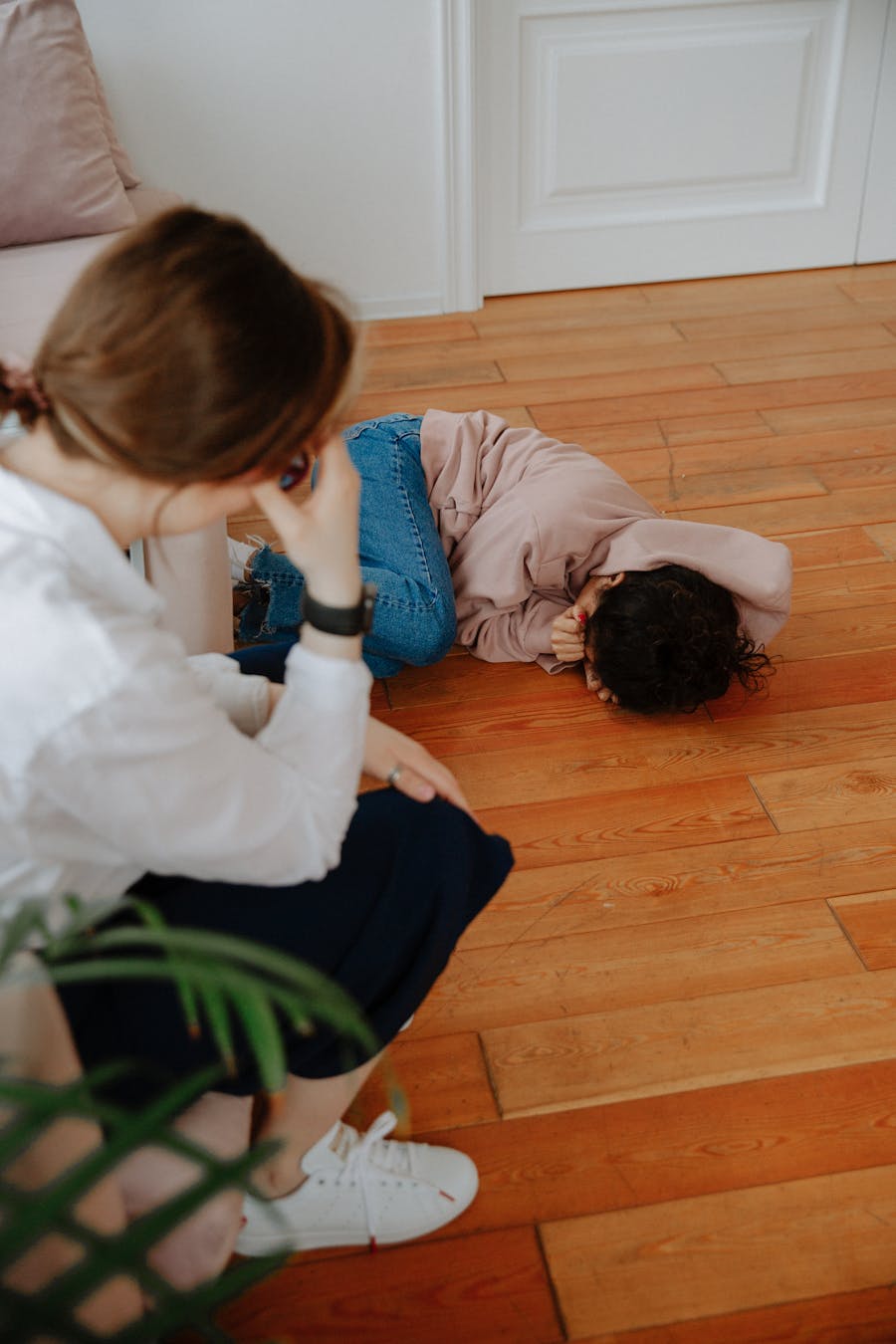
For many children ages 5 to 7, anxiety first shows up in the body. This is not “fake.” When a child’s nervous system senses threat (or any human for that matter!), even if the threat is emotional or imagined, the body can respond with very real physical symptoms.
Physical symptoms may include:
- Stomachaches
- Headaches
- Nausea
- Vomiting before school or separation
- Fatigue
- Muscle tension
- Sweating
- Shaking
- Dizziness
- Racing heart
- Shortness of breath
- Frequent bathroom trips
The American Academy of Pediatrics notes that school refusal in anxious children may include frequent physical complaints, especially headaches or stomachaches that lead to nurse visits, absences, or going home from school.2
Before assuming anxiety is the only explanation, it is wise to check in with your child’s pediatrician. Medical issues, sleep problems, constipation, reflux, food sensitivities, and other concerns can overlap with anxiety symptoms.
When Child Anxiety Symptoms Become a Concern
Anxiety becomes more clinically concerning when it is persistent, disproportionate, and disruptive. In everyday terms, this means the worry is bigger than the situation calls for, lasts longer than expected, and starts shrinking your child’s life.
Consider getting support if your child’s anxiety:
- Interferes with school attendance or learning
- Makes separation consistently distressing
- Prevents normal play, friendships, or activities
- Causes frequent physical complaints
- Creates major bedtime or sleep disruption
- Leads to repeated avoidance
- Causes daily family stress
- Seems to be getting worse instead of better
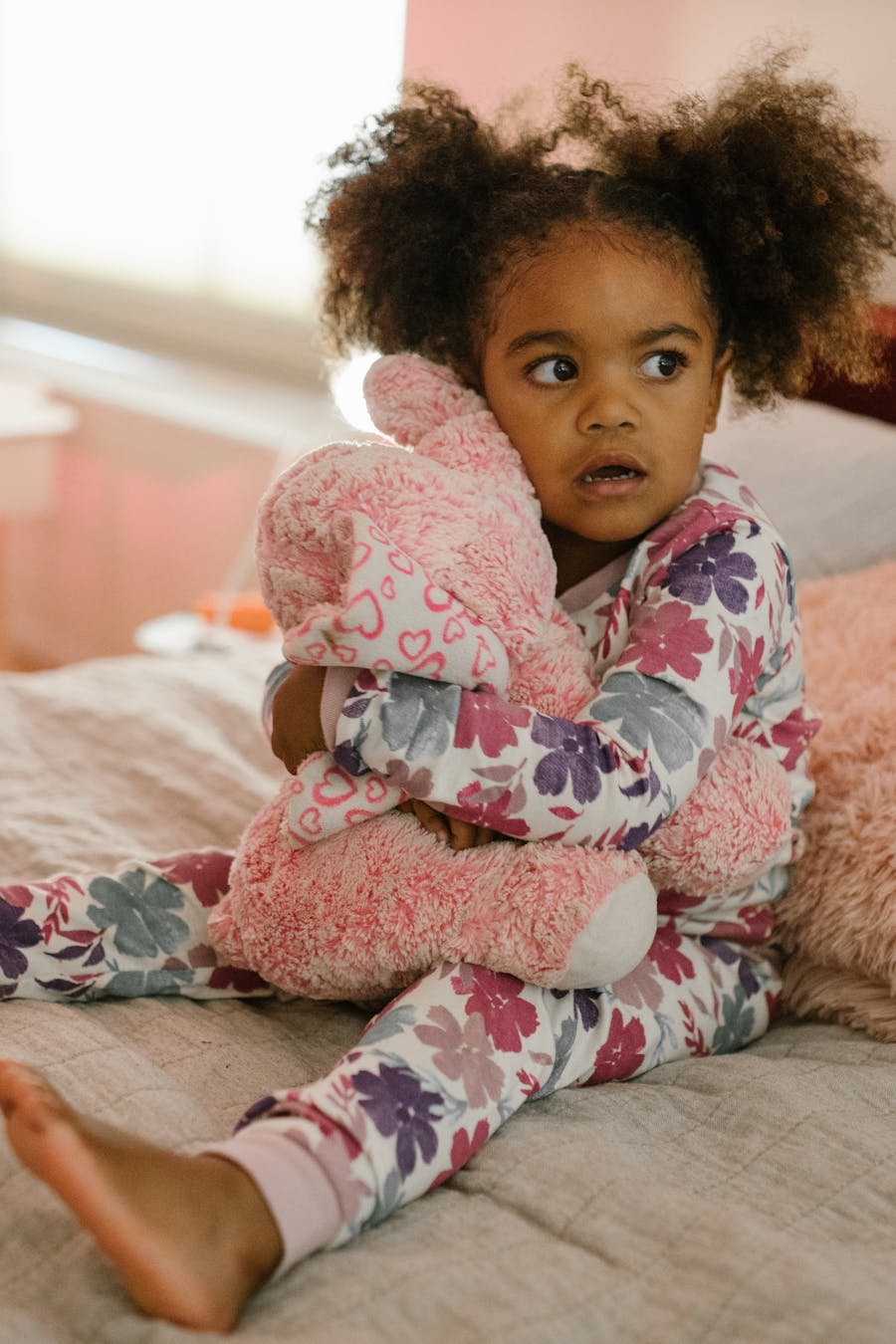
The DSM-5-TR includes several anxiety disorders that can apply to children, including separation anxiety disorder, selective mutism, specific phobia, social anxiety disorder, and generalized anxiety disorder.3 A diagnosis is never based on one rough morning or one hard week. Clinicians look at the full picture, including duration, impairment, developmental stage, family context, school functioning, and medical factors.
For example, DSM-5-TR criteria summarized by Merck/MSD indicate that separation anxiety disorder symptoms in children must persist for at least 4 weeks and cause significant distress or impairment.4 For generalized anxiety disorder, DSM-based criteria include excessive worry more days than not for at least 6 months, with children needing only one associated symptom such as restlessness, fatigue, concentration problems, irritability, muscle tension, or sleep disturbance.5
Ready to take the next steps in supporting your child?
Types of Anxiety Disorders in Young Children
Not every anxious child has an anxiety disorder. But understanding the common categories can help parents recognize patterns.
Common childhood anxiety presentations include:
- Separation anxiety: intense distress about being away from a parent or caregiver
- Generalized anxiety: frequent worry about many areas, such as school, safety, performance, or family
- Specific phobia: intense fear of a specific thing, such as dogs, storms, vomiting, elevators, or bugs
- Social anxiety: fear of being embarrassed, judged, watched, or rejected
- Selective mutism: consistent difficulty speaking in certain settings, such as school, despite speaking in other settings
Selective mutism is classified as an anxiety disorder in DSM-5 and DSM-5-TR, according to the APA Dictionary of Psychology.6 This distinction matters because a child who will not speak at school may not be defiant. They may be anxious and frozen.
How Parents Can Help an Anxious Child
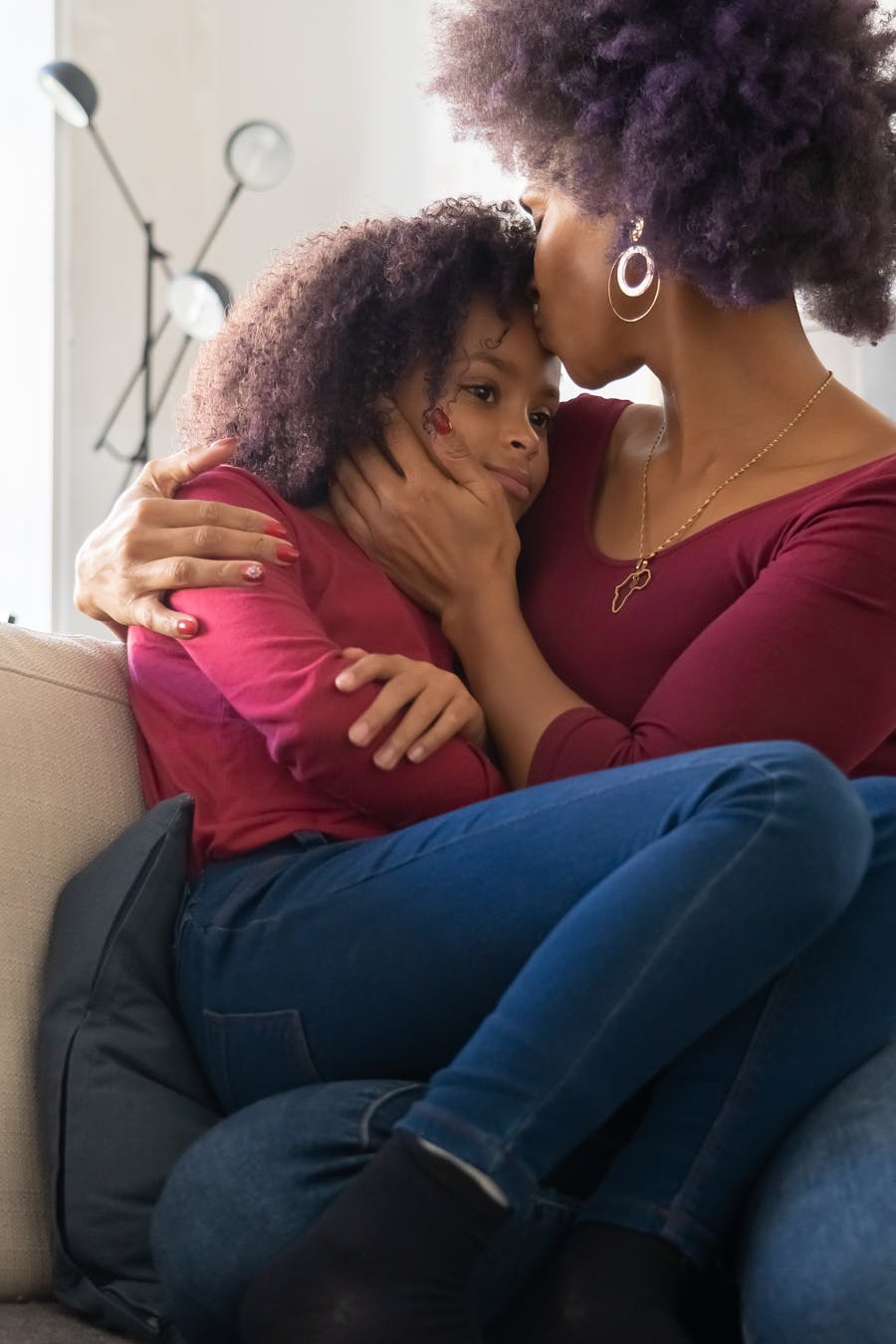
The most helpful approach is warm, steady, and brave. Anxious children need empathy, but they also need gentle support to build confidence.
Try these steps:
- Name what you see: “Your body looks worried right now.”
- Validate the feeling: “I believe you. This feels really hard.”
- Communicate confidence: “And I know you can handle this with support.”
- Break scary tasks into smaller steps
- Practice coping skills when your child is calm
- Avoid excessive reassurance loops
- Keep routines predictable but not rigid
- Praise effort, not perfection
- Partner with teachers if school is a trigger
- Model calm breathing and flexible thinking
Cognitive behavioral therapy, or CBT, is one of the most evidence-supported treatments for anxiety in children and adolescents. Clinical guidelines from the American Academy of Child and Adolescent Psychiatry report that CBT and SSRI medication both have empirical support for short-term treatment of pediatric anxiety disorders, with treatment decisions based on severity, age, diagnosis, family preference, and clinical assessment.7
For many 5-, 6-, and 7-year-olds, therapy may include parent coaching, play-based interventions, emotional identification, gradual exposure, coping skills, and school collaboration.
We offer Child Therapy that meets your child where they are at and includes parent coaching and consultation. A team effort and open communication is key!
Questions Parents Search When They’re Worried About Their Child’s Anxiety
These are the real questions I hear from parents in my office — and the ones I see parents searching online at midnight when they can’t quite put their finger on what’s going on.
Why does my child say their stomach hurts every morning before school?
When a physical complaint shows up consistently around a specific situation — school mornings, drop-off, Sunday nights — it is worth taking seriously, even if the pediatrician finds nothing medically wrong. The nervous system is not making it up. When a child’s anxiety is activated, the body responds with real physical symptoms: nausea, stomachaches, headaches, and dizziness are all common. A child who says “my tummy hurts” every Monday morning may not have a digestive problem. They may have anxiety that is speaking through their body because they do not yet have the words — or the emotional vocabulary — to say “I’m scared.”
Is school refusal a behavior problem or anxiety?
This is one of the most important distinctions I make with families. School refusal can look like defiance, but in young children ages 5 to 7, it is almost always driven by anxiety rather than willfulness. The child who melts down at drop-off, clings to the car door, and asks to go home is not trying to manipulate you. Their nervous system has flagged school as threatening, and their behavior is a response to fear — not a power play. Treating it as a discipline issue typically makes it worse. Understanding it as anxiety opens the door to the right kind of help.
What is the difference between separation anxiety and normal clinginess?
Most young children go through periods of clinginess, especially during transitions or stress. Normal clinginess tends to be temporary, manageable, and does not significantly disrupt daily life. Separation anxiety disorder is different in intensity, duration, and impact. A child with separation anxiety may be so distressed at the thought of leaving you that they become inconsolable, refuse to attend school or activities, have physical symptoms, or cannot sleep alone — and this pattern persists for weeks or months. If separations are consistently a major event rather than a minor hurdle, that is worth exploring with a professional.
My child asks “what if” questions constantly — is that anxiety?
“What if the car crashes?” “What if you don’t come back?” “What if I get sick at school?” Repeated “what if” questioning is one of the clearest early signals of anxiety in young children. It reflects a nervous system that is scanning for threat, trying to find safety through reassurance. The challenge is that reassurance gives only brief relief — the “what if” questions return quickly because the underlying anxiety has not been addressed. If your child’s “what if” questions are frequent, hard to redirect, and causing distress, that is a meaningful pattern to pay attention to.
Can anxiety in a 5 or 6 year old go away on its own?
Sometimes, yes — especially when anxiety is mild and tied to a specific transition that resolves. Many children settle into kindergarten after a difficult first month, or outgrow a specific fear with time and gentle exposure. But when anxiety is persistent, intensifying, or interfering with daily life, it is much less likely to simply fade on its own — and waiting can allow avoidance patterns to become more entrenched. Early support is almost always more effective than waiting to see if a child grows out of it. Seeking help early does not mean your child is broken. It means you are catching something before it digs in deeper.
When should I take my child to therapy for anxiety?
You do not need to wait for a crisis, like a divorce or major life change. If your child’s worry is frequent, intense, and interfering with school, sleep, friendships, or family life — and if it is not improving on its own over several weeks — that is a reasonable moment to reach out. You can start with your child’s pediatrician to rule out medical causes, and then connect with a child therapist who specializes in anxiety. A licensed therapist can help you understand what you are seeing, give your child concrete coping tools, and coach you on how to respond in ways that build confidence rather than reinforce avoidance.
Is this anxiety or does my child just have a hard personality?
Anxious children are not difficult children. They are children whose nervous systems are more reactive, more tuned in, and more easily overwhelmed — and that often comes alongside being sensitive, empathetic, creative, and deeply caring. The goal of therapy is not to change who your child is. It is to give them tools to work with their nervous system rather than be run by it. If your child is struggling in a way that is affecting their daily life and your family’s peace, that is worth taking seriously regardless of how you label it.
Child Anxiety Symptoms Age 5 6 7: When to Seek Support
If you are noticing anxiety symptoms in your 5, 6, or 7 year old child, you do not have to wait until your child is in crisis to ask for help. Early support can prevent anxiety from becoming more entrenched and can give both you and your child tools that actually work.
Reach out to a pediatrician, child therapist, or qualified mental health professional if the anxiety is frequent, intense, impairing, or affecting your family’s daily life.
At The Peaceful Mind Counseling Center, we help families understand what is underneath a child’s anxiety and create a plan that feels compassionate, practical, and developmentally appropriate. So if you’re ready, contact us today to take the first step toward helping your child feel safer, braver, and more supported.
Ready to take the next steps in supporting your child?
Footnotes
- Centers for Disease Control and Prevention, “Anxiety and Depression in Children,” including signs that anxiety may appear as fear, worry, irritability, anger, sleep problems, fatigue, headaches, or stomachaches. (CDC)
- American Academy of Pediatrics, “Supporting Students with Anxiety in School,” including school refusal, frequent absences, and physical symptoms such as headaches and stomachaches. (AAP)
- American Psychiatric Association, DSM-5 classification table listing anxiety disorders, including separation anxiety disorder, selective mutism, specific phobia, social anxiety disorder, and generalized anxiety disorder. (American Psychiatric Association)
- Merck/MSD Manual Professional Edition, “Separation Anxiety Disorder,” summarizing DSM-5-TR-based diagnostic considerations, including symptoms lasting at least 4 weeks in children and causing distress or impairment. (MSD Manuals)
- Lurie Children’s RAMP, “Generalized Anxiety Disorder,” summarizing DSM-5 criteria for generalized anxiety disorder, including 6-month duration and associated symptoms. (RAMP)
- American Psychological Association Dictionary of Psychology, “Selective Mutism,” noting that selective mutism is classified under anxiety disorders in DSM-5 and DSM-5-TR. (APA Dictionary)
- Journal of the American Academy of Child & Adolescent Psychiatry, “Clinical Practice Guideline for the Assessment and Treatment of Children and Adolescents With Anxiety Disorders,” summarizing evidence for CBT and SSRI medication in pediatric anxiety treatment. (jaacap.org)


0 Comments