

If you’re wondering how to help a child through divorce, you may be watching every bedtime struggle or quiet car ride and wondering, “Are they going to be okay?”
Start with reassurance, predictable routines, and protection from adult conflict. Children need to know the separation is not their fault, they cannot fix it, and the adults will continue taking care of them.[1]
You don’t need a perfect explanation. You need an ongoing conversation that leaves room for questions, sadness, and ordinary childhood.
Table of contents
- What children need during divorce
- Age-based ways to support your child
- The best and hardest ages for divorce
- Do’s and don’ts for parents
- When to consider counseling
What Children Need From Parents During Divorce
Children’s immediate concerns may be surprisingly practical: Who will pick me up? Where will my dog live? Can I still see my friends?
Give clear answers about what you know. If something remains undecided, try: “We haven’t worked out the holiday schedule yet. We’ll tell you when we know.”
When safe and feasible, plan the initial conversation together. Keep explanations simple and avoid details about affairs, financial disputes, or who is to blame.[1]
An example of a simple explanation could be:
“We’re going to live in separate homes. This is an adult decision. You didn’t cause it, and it isn’t your job to change it. Here’s what this week will look like.”
Make only promises you can keep. Your child needs reliable information more than a cheerful prediction that everything will be easy.
For help with the first conversation, explore our guide to talking to kids about divorce by age.
Age-Based Tips for Helping Kids Cope With Divorce
These age ranges are guides, not rules. Match your explanation to your child’s development, communication style, and questions.[2]
Babies and toddlers: Focus on familiar care
Babies obviously cannot understand a divorce explanation, so focus on their everyday experience: responsive care, familiar caregivers, and soothing routines.
For toddlers, use concrete language: “You’re sleeping here tonight. Dad will see you tomorrow.” A familiar blanket or bedtime book can give you something consistent to carry between homes.
Keep goodbyes calm and predictable. Avoid promising a return time unless you know it is accurate.
Preschoolers: Repeat reassurance and expect questions
Preschoolers may become clingier, have more tantrums, or return to behaviors they had outgrown, such as toileting difficulties. Some blame themselves for the separation.[3]
- Explain where they will sleep and who will care for them.
- Use a simple picture calendar to show the plan.
- Repeat that their behavior did not cause the divorce.
- Respond to setbacks patiently rather than shaming them.
If your child asks the same question repeatedly, answer simply and kindly again. Familiar words may be reassuring even when you’ve already explained it before.
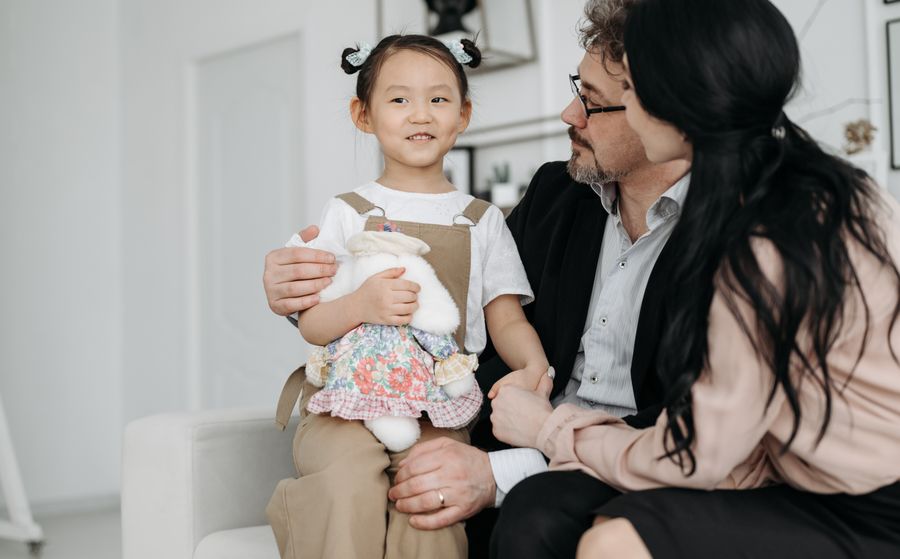
Elementary-age children: Make room for grief and loyalty
School-age children may worry about choosing sides, hope their parents will reunite, or struggle with concentration and schoolwork.[3]
Ask specific, manageable questions: “What feels hardest about switching houses?” may be easier to answer than “How do you feel about the divorce?”
Let your child enjoy time with each safe parent without managing your reaction. Keep school, friendships, and activities as steady as circumstances allow. A discreet update to their teacher can also help adults coordinate support.[4]
Tweens and teens: Offer a voice without adult responsibility
Teens may want more information and more say in how changes affect their lives. Calm, honest conversations still need boundaries around adult relationship details.[2]
Ask about practical concerns: privacy, transportation, friendships, and activities. Listen before solving.
Avoid making your teen your confidant or expecting them to become a replacement parent for younger siblings.[3] “You can tell me how this affects you” gives them a voice without handing them responsibility for the family.
Ready to take the next steps in supporting your family?
At What Age Do Children Cope Best With Divorce?
There is no universal “best age.” Age alone cannot predict adjustment; children’s needs, parental responsiveness, conflict levels, and stability all shape their experience.[5]
Likewise, there is no single hardest age for every child. A preschooler’s separation fears and a teenager’s anger can both deserve serious attention.
Rather than trying to find an age that makes divorce painless, focus on what you can influence now: safety, connection, routines, and how disagreements are handled.
Supporting Kids Through Divorce: Do’s and Don’ts
Do
- Keep everyday routines dependable. Preserve familiar meals, bedtime rituals, and activities where possible.
- Allow mixed feelings. “You can miss our old home and enjoy your new room.”
- Make time for individual connection. A short walk or shared snack can create space to talk.
- Find adult support for yourself. Give your grief and frustration somewhere to go outside your child’s care.[4]
Don’t
- Ask your child to deliver scheduling demands or financial messages.
- Criticize the other parent within earshot.
- Pressure your child to choose a side.
- Question them as though they are reporting on the other household.[3][4]
What is the biggest mistake during a divorce? There is no formal ranking, but pulling children into parental conflict is a particularly harmful pattern. Children should not have to act as a referee, messenger, or emotional caretaker.[1]
When abuse or intimidation is involved, prioritize safety and individualized professional guidance over ordinary advice about cooperation or joint conversations.[4]
When Helping a Child Through Divorce May Include Therapy
Consider professional support when distress persists, worsens, or interferes with daily life. Changes in sleep, eating, school functioning, anxiety, withdrawal, or aggression are reasons to speak with your child’s pediatrician or a mental health professional.[4]

Our guide to signs your child needs counseling can help you think through that next step.
You can also seek guidance before difficulties become overwhelming. Schedule a free consultation to discuss your concerns and explore support.
How to Help a Child Through Divorce, One Day at a Time
As much as you probably would like to, you cannot remove every painful feeling from this transition. You CAN keep showing your child that their feelings are welcome and their care remains an adult responsibility.
If your family needs support in Las Vegas or Summerlin, explore therapy for kids going through divorce or schedule a free consultation with us here!
Ready to take the next steps in supporting your family?
Sources
[1]: American Academy of Child and Adolescent Psychiatry. (2026). Children and Divorce. Facts for Families, No. 1.
[2]: American Academy of Pediatrics. (2020). How to Talk to Your Children about Divorce. HealthyChildren.org.
[3]: American Academy of Pediatrics. (2026). Divorce and Separation: How to Help Your Child Adjust. HealthyChildren.org.
[4]: Canadian Paediatric Society. (2018). Helping children cope with separation and divorce. Caring for Kids.
[5]: American Academy of Pediatrics. How to Support Children after Their Parents Separate or Divorce. HealthyChildren.org.


0 Comments