
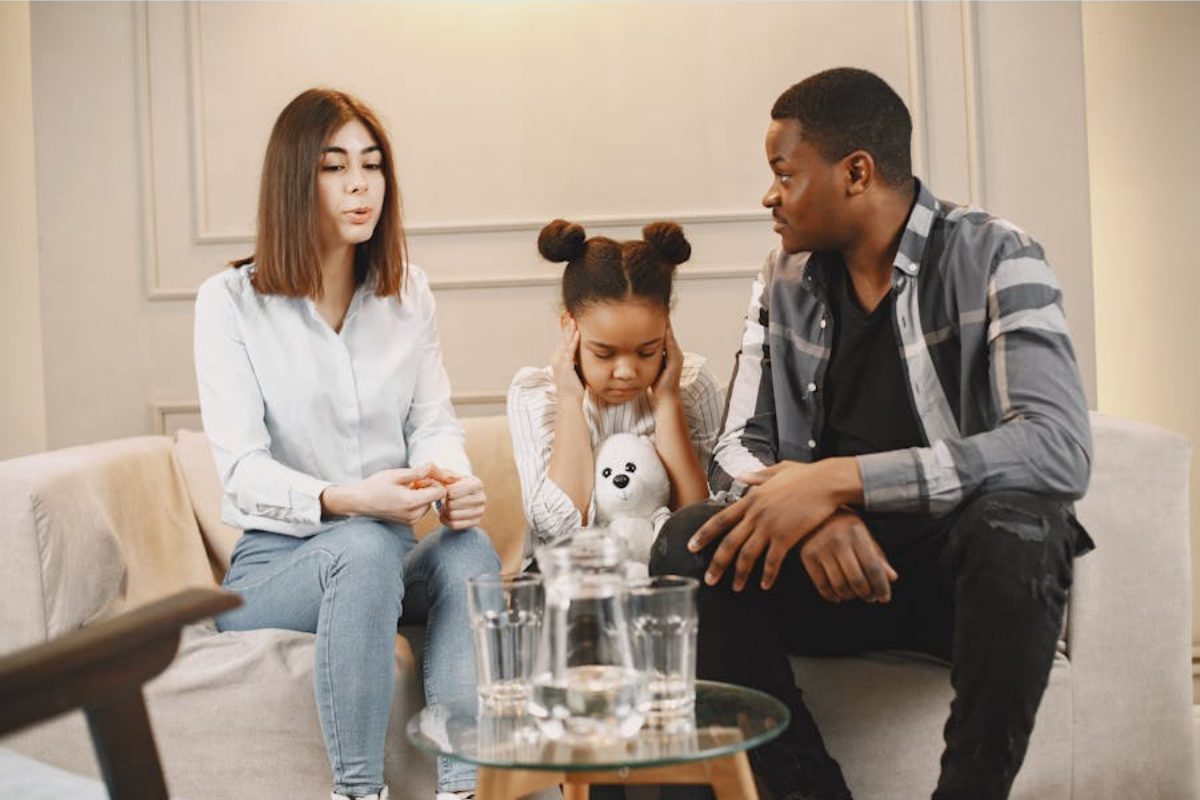
Talking to kids about divorce by age matters because a toddler, a 7-year-old, and a teenager will all hear the same sentence differently: “Mom and Dad are getting divorced.” For a child, divorce is not just a legal change. It can feel like a change in safety, routine, identity, and belonging. At The Peaceful Mind Counseling Center in Las Vegas, we work with children and families navigating exactly this — and what we see most often is that parents want to do right by their kids and just need a starting point.
The good news is that children do not need a perfect explanation. They need a clear, calm, age-appropriate one. They need reassurance that they are loved, that the divorce is not their fault, and that the adults are still responsible for taking care of them.
Table of Contents
- Why Talking to Kids About Divorce by Age Matters
- How to Talk to Toddlers and Preschoolers About Divorce
- Talking to School-Age Kids About Divorce
- How to Talk to Tweens About Divorce
- Talking to Teens About Divorce
- Signs Your Child May Need Extra Support
- Talking to Kids About Divorce by Age With Support
Why Talking to Kids About Divorce by Age Matters
Children process divorce through the lens of their developmental stage. Younger children often think concretely and may worry about where they will sleep, who will pick them up, or whether they caused the separation. Older children may understand more of the relational complexity but still feel grief, anger, confusion, or loyalty conflicts.
Research from the American Academy of Pediatrics notes that many children experience painful short-term feelings after separation or divorce, and many adjust over time, especially when parents reduce conflict and maintain supportive relationships.1 That means the way you talk about divorce matters, but so does the emotional environment that follows.
As much as possible, children need:
- Simple, honest language
- Repeated reassurance
- Predictable routines
- Permission to love both parents
- Protection from adult conflict
- Space to ask questions over time
Try to avoid one big “perfect” conversation. This is usually a series of conversations that evolve as your child grows.
How to Talk to Toddlers and Preschoolers About Divorce
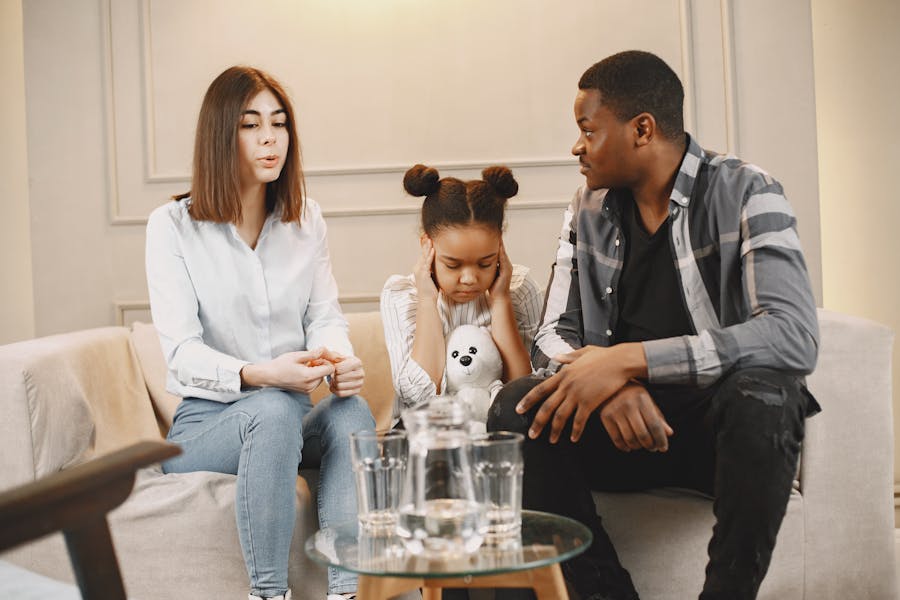
Toddlers and preschoolers do not need detailed explanations about why the divorce is happening. They need to know what will happen to them.
At this age, children may show stress through behavior rather than words. You may notice clinginess, sleep disruption, bathroom accidents, tantrums, separation anxiety, or regression. These behaviors do not mean you said the wrong thing. They may mean your child is trying to make sense of a big change with a still-developing brain.
You might say:
- “Mommy and Daddy are going to live in two different homes.”
- “You did not cause this.”
- “We both love you so much.”
- “We are still a family.”
- “We have a plan for how everyone will be happy and safe.”
- “Today you are sleeping at Mommy’s house. Tomorrow Daddy will pick you up.”
Keep the language concrete and repetitive. Preschoolers may ask the same question many times because repetition helps them feel safe.
Avoid saying things like:
- “We don’t love each other anymore.”
- “Daddy left us.”
- “This was Mommy’s decision.”
- “You’re too little to understand.”
Even if those statements feel emotionally true in a painful moment, they can create fear, blame, or confusion for a young child. A pediatric therapist can help you and your children approach this time of change.
Talking to School-Age Kids About Divorce
School-age children usually understand more about relationships, but they may still personalize the divorce. They might wonder, “Was it because I was bad?” or “If I behave better, will you get back together?”
For kids around ages 6 to 10, give a little more information, but still keep adult details private. They need emotional honesty without being pulled into the adult story.
You might say:
- “We have tried to solve some grown-up problems, and we have decided we will be better parents living in separate homes.”
- “This is not because of anything you did.”
- “You do not have to choose sides.”
- “It is okay to feel sad, mad, confused, or even relieved.”
Children in this age group may worry about practical details, such as school, sports, holidays, pets, bedrooms, and friends. When possible, answer those questions clearly.
Helpful supports include:
- A visual calendar for parenting schedules
- Consistent bedtime and school routines
- A shared script between parents
- Reassurance before transitions
- Time alone with each parent
The Child Mind Institute emphasizes shielding children from being caught in the middle during divorce, including avoiding conflict, blame, or using children as messengers.2 This is one of the most protective things parents can do.

How to Talk to Tweens About Divorce
Tweens are old enough to notice emotional nuance. They may have strong opinions, ask direct questions, or quietly observe everything while pretending they are fine.
At this age, it is appropriate to validate complexity without over-disclosing. A tween may want to know who decided, whether someone did something wrong, or whether the family will ever feel normal again.
You might say:
- “There are adult reasons for this decision, and we are not going to put those details on you.”
- “You can ask us questions, and we will answer what is appropriate.”
- “You are allowed to have your own feelings about this.”
- “You do not need to take care of either parent emotionally.”
Tweens can be especially vulnerable to loyalty conflicts. They may feel pressure to comfort a parent, defend a parent, or reject one parent to protect the other.
Try to avoid:
- Sharing legal or financial details
- Criticizing the other parent
- Asking your child to report back
- Treating your child like a therapist
- Assuming silence means they are okay
Instead, check in gently and often. A simple “I know this is a lot. You don’t have to talk right now, but I’m here when you’re ready” can go a long way.
Ready to take the next steps in your mental health journey?
Talking to Teens About Divorce
Teens may understand divorce more like adults, but they are still children in the family system. They may respond with anger, withdrawal, sarcasm, emotional caretaking, or a sudden desire to be away from home.

Teenagers deserve honesty, but not inappropriate adult disclosure. You can acknowledge that the relationship has been difficult without giving details that change how they see themselves or either parent. Keeping the lines of communication open is going to be imporant.
You might say:
- “We know this affects your life, not just ours.”
- “You are allowed to be upset with us.”
- “We will not ask you to pick a side.”
- “We want to keep your routines, school, friendships, and activities as stable as possible.”
Teens may ask to have input into schedules. When possible, give them voice without giving them full responsibility. There is a difference between “Your needs matter” and “You decide the custody plan.”
Also watch for teens who become “too fine.” Some teens cope by over-functioning, focusing on achievement, or emotionally disconnecting. Others may show distress through irritability, risk-taking, school changes, sleep issues, or isolation.
Signs Your Child May Need Extra Support
Divorce itself is not a mental health diagnosis. However, major family transitions can become clinically significant when a child’s emotional or behavioral symptoms are intense, persistent, or impairing.
The DSM-5-TR includes Adjustment Disorders as stress-related conditions in which emotional or behavioral symptoms develop in response to an identifiable stressor, such as a major life change, and cause significant distress or impairment.3 This does not mean every child going through divorce has a disorder. It simply means parents should pay attention when a child seems stuck, overwhelmed, or unable to function like themselves.
Consider child pediatric therapy services if your child has:
- Ongoing sleep or appetite changes
- Frequent stomachaches or headaches without a clear medical cause
- School refusal or major academic changes
- Persistent sadness, anxiety, anger, or withdrawal
- Regression that does not improve
- Increased aggression or defiance
- Self-harm statements or hopelessness
- Panic, intense separation anxiety, or fear of abandonment
The American Academy of Child and Adolescent Psychiatry notes that therapy can be helpful for children of divorce and for parents who want support reducing the strain on the family.4
So if your child is struggling, you do not have to wait until things are “bad enough.” Early support for kids going through a divorce can help children feel safer, more understood, and less alone.
Divorce is one of the most common triggers for big feelings in children. If you’re noticing meltdowns, shutdowns, or emotional outbursts alongside the transition, here’s how to help your child navigate big emotions.
Ready to take the next steps in your mental health journey?
Talking to Kids About Divorce by Age With Support
Talking to kids about divorce by age is really about meeting your child where they are developmentally, emotionally, and relationally. Your words matter, but your steadiness matters even more.
You do not have to have every answer. You can say, “I don’t know yet, but I will tell you when I do.” You can say, “This is hard, and we are going to get through it together.” You can repair if you overshare, lose your patience, or say something imperfectly.
At The Peaceful Mind Counseling Center, we help children, teens, and parents navigate divorce with compassion, clarity, and evidence-informed care. If your family is walking through this transition and you want support, reach out and we would be happy to support you.
Ready to take the next steps in your mental health journey?
Frequently Asked Questions About Talking to Kids About Divorce
What age should you tell kids about divorce?
There is no age that is too young to need an explanation. Even toddlers notice when routines change and a parent is no longer in the home. The goal is not to wait until your child is old enough to understand the full picture — it is to give them an age-appropriate explanation as soon as the change begins to affect their daily life. Younger children need simple, concrete language about what will happen to them. Older children can handle a bit more context. But at every age, the most important messages are the same: you are loved, this is not your fault, and we are still your parents.
How do you explain divorce to a 5-year-old?
With a 5-year-old, keep it short, concrete, and focused on their daily life. You might say something like: “Mommy and Daddy are going to live in two different homes. You did not cause this. We both love you so much, and we both still take care of you.” Avoid explaining the reasons for the divorce or using emotional language about the relationship. At this age, children are most worried about where they will sleep, who will pick them up, and whether they will still see both parents. Answer those questions clearly and repeat your reassurances often, because repetition is how young children build a sense of safety.
Should both parents be present when telling kids about divorce?
When possible, yes. Having both parents present sends a powerful message to your child: we are still a team when it comes to you. It also prevents one parent from carrying the emotional weight of the conversation alone, and it reduces the chance that children hear two different versions of the story. That said, both parents need to be on the same page before having that conversation. If there is active conflict between you, or if one parent is likely to break down or blame the other, it may be better to have a plan first — and potentially to speak with a therapist about how to approach it together.
What should you not say to a child about divorce?
Avoid saying anything that assigns blame, creates loyalty conflicts, or puts adult emotional weight on your child. This includes statements like “Daddy left us,” “This was Mom’s decision,” or “You’ll understand when you’re older.” Also avoid sharing legal or financial details, asking your child to keep secrets, or using them as a messenger between households. Even when these things come from a place of pain or exhaustion, children internalize them in ways that can affect how they see themselves and both parents for years. If you are struggling to hold that line, that is completely understandable — and it is one of the things a therapist can help with.
When should a child see a therapist after divorce?
You do not need to wait for a crisis. If your child is showing signs of persistent sadness, anxiety, anger, sleep changes, school avoidance, or regression that is not improving after a few weeks, those are good reasons to reach out. But even children who seem to be coping well can benefit from having a neutral, supportive space to process what they are going through — especially if there is ongoing conflict between households. At The Peaceful Mind Counseling Center in Las Vegas, we offer child pediatric therapy for kids navigating family transitions like divorce. Early support often prevents bigger struggles later on.
Sources
- American Academy of Pediatrics, “How to Support Children after Their Parents Separate or Divorce.” (HealthyChildren.org)
- Child Mind Institute, “Supporting Kids During a Divorce.” (Child Mind Institute)
- Merck Manual Professional Edition, “Adjustment Disorders,” summarizing DSM-5-TR criteria. (Merck Manuals)
- American Academy of Child and Adolescent Psychiatry, “Children and Divorce.” (aacap.org)


0 Comments