

When you’re searching for how to calm anxiety when nothing works, you are probably not looking for another person to tell you to “just breathe.” You have likely already tried the breathing, the walk, the journaling, the positive thoughts, the distraction, and maybe even the prayer in the bathroom with the door locked.
And still, your body feels like it is sounding an alarm.
First, I want you to know this: anxiety that feels hard to calm is not a personal failure. It does not mean you are weak, dramatic, broken, or “bad at coping.” Anxiety is a nervous system response, and sometimes your body needs more than a quick mindset shift to feel safe again.
The goal is not to force yourself into instant peace. The goal is to gently tell your brain and body, “We are safe enough in this moment to take the next step.”
Table of Contents
- Why Anxiety Feels Impossible to Calm
- How to Calm Anxiety When Nothing Works in the Moment
- Grounding Techniques for Anxiety That Feels Overwhelming
- What to Do When Breathing Exercises Make Anxiety Worse
- When Anxiety Needs More Support
- How to Calm Anxiety When Nothing Works: You Are Not Alone
Why Anxiety Feels Impossible to Calm
Anxiety is not “all in your head.” It is very much in your body too.
When your brain perceives threat, your nervous system can activate a fight, flight, freeze, or fawn response. Your heart may race, your chest may tighten, your stomach may turn, and your thoughts may move faster than you can keep up with.
According to the DSM-5-TR criteria for generalized anxiety disorder, clinical anxiety can involve excessive worry that is difficult to control, along with symptoms like restlessness, fatigue, difficulty concentrating, irritability, muscle tension, and sleep disturbance.1
That does not mean every anxious moment is a disorder. It does mean that anxiety can be deeply physical and deeply disruptive.
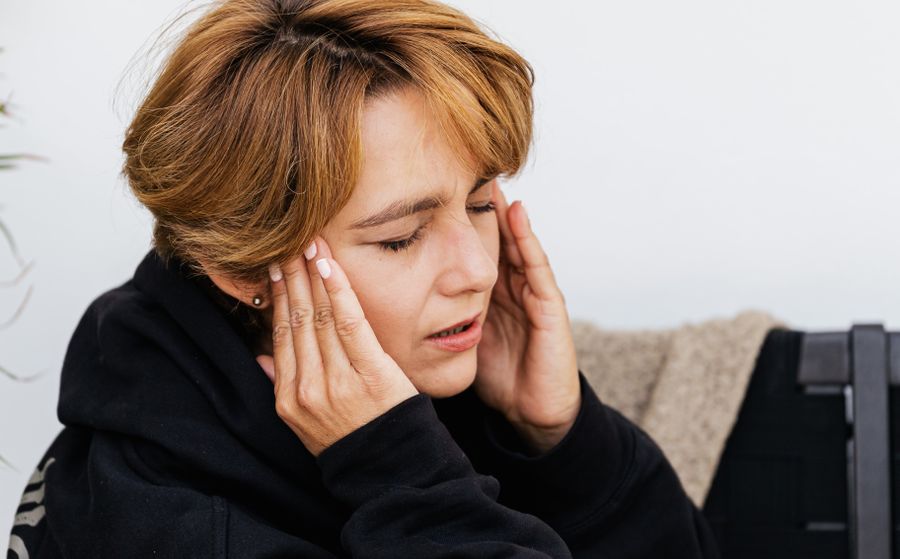
So if you have ever thought, “Why can’t I just calm down?” the answer may be: because your body does not yet believe the threat has passed.
How to Calm Anxiety When Nothing Works in the Moment
When anxiety is high, start smaller than you think you should.
This is not the time for a full life overhaul. This is the time to give your body one clear, concrete signal of safety.
When you are experiencing anxiety, try this sequence:
- Name what is happening: “This is anxiety. My body is having an alarm response.”
- Lower the demand: “I do not have to solve my whole life right now.”
- Change your sensory input: step outside, splash cold water on your face, dim the lights, or sit with your back against a wall.
- Do one regulating action for 60 seconds, not 30 minutes.
When anxiety is intense, long coping exercises can feel impossible. But most people can try something for one minute.
You are not trying to feel amazing. You are trying to create a tiny shift toward safety.
If anxiety has been running your life and you are ready for support that goes deeper than “just calm down,” contact us today to take the first step toward healing.
Grounding Techniques for Anxiety That Feels Overwhelming
Grounding can be helpful because it brings your attention out of the spiral and back into the present moment. Cleveland Clinic describes grounding as a way to reconnect with the here and now through your senses, body, and immediate surroundings.2
One simple grounding practice is the 5-4-3-2-1 method:
- 5 things you can see
- 4 things you can feel
- 3 things you can hear
- 2 things you can smell
- 1 thing you can taste
But here is the part I want you to remember: grounding is not a test. You do not have to do it perfectly.
If naming five things feels like too much, name one. If looking around makes you feel more activated, keep your eyes on one steady object. If stillness makes your anxiety louder, try grounding while walking slowly.
You can also use “pressure grounding,” which can feel more regulating for some people:
- Put both feet flat on the floor.
- Press your toes down gently.
- Notice the chair holding you.
- Place one hand on your chest and one hand on your stomach.
- Say, “Right now, I am here.”
This is not magic. It is repetition. Your nervous system learns safety through repeated experiences of being supported through distress.
Ready to take the next steps in your mental health journey?
What to Do When Breathing Exercises Make Anxiety Worse
Some people feel worse when they focus on their breath. If that is you, nothing is wrong with you.

For certain people, especially those who experience panic, trauma symptoms, or high body vigilance, paying close attention to breathing can make the body feel even more monitored. Instead of calming down, you may start thinking, “Am I breathing right? Why does my chest feel tight? What if something is wrong?”
If breathwork helps you, wonderful. Research from the National Center for Complementary and Integrative Health notes that relaxation techniques, including deep breathing and progressive muscle relaxation, may help some people manage stress and anxiety symptoms.3
But if breathing makes anxiety worse, try external regulation first:
- Look at something neutral in the room.
- Listen to a steady sound.
- Hold an ice cube or cold drink.
- Walk outside and describe what you see.
- Hum softly or lengthen your exhale without forcing a deep inhale.
Sometimes the gentlest path is not “take a deep breath.” Sometimes it is “notice the floor, soften your shoulders, and stop fighting your body.”
When Anxiety Needs More Support
Coping skills are important, but they are not always enough on their own.
If your anxiety is interfering with sleep, relationships, parenting, work, eating, decision-making, or your ability to feel present in your own life, it may be time for more support. That support might include therapy, medical evaluation, medication, lifestyle changes, or a combination of approaches.
The National Institute of Mental Health notes that anxiety disorders are treatable and may respond to psychotherapy, medication, or both.4 Cognitive behavioral therapy, often called CBT, is one of the most well-studied therapy approaches for anxiety, and it focuses on building skills to understand and respond differently to anxious thoughts and behaviors.5
You may also benefit from therapy if you notice:
- You are avoiding more and more things because of anxiety.
- You need constant reassurance to feel okay.
- Your body feels chronically tense or on edge.
- You are having panic attacks.
- Your thoughts feel intrusive or hard to stop.
- You feel like you cannot rest, even when nothing is “wrong.”

There is no prize for suffering longer than you have to.
So if you’re ready, contact us today and we’d love to get you the support you deserve.
How to Calm Anxiety When Nothing Works: You Are Not Alone
Learning how to calm anxiety when nothing works starts with understanding that anxiety is not something you bully into silence. It is something you respond to with steadiness, support, and the right tools.
Some days, calming anxiety may look like grounding your body for one minute. Other days, it may look like calling your therapist, asking for help, or finally admitting that what you are carrying has become too heavy to carry alone.
You do not have to figure this out perfectly. You just need one next supportive step.
And if you are ready for compassionate, evidence-based care that helps you understand your anxiety instead of feeling ruled by it, contact us today to take the first step toward healing.
Ready to take the next steps in your mental health journey?
Footnotes
- MSD Manual Professional Edition, “Generalized Anxiety Disorder,” based on clinical diagnostic criteria: https://www.msdmanuals.com/professional/psychiatric-disorders/anxiety-and-trauma-and-stressor-related-disorders/generalized-anxiety-disorder
- Cleveland Clinic, “13 Grounding Techniques To Help Calm Anxiety”: https://health.clevelandclinic.org/grounding-techniques
- National Center for Complementary and Integrative Health, “Relaxation Techniques: What You Need To Know”: https://www.nccih.nih.gov/health/relaxation-techniques-what-you-need-to-know
- National Institute of Mental Health, “Anxiety Disorders”: https://www.nimh.nih.gov/health/topics/anxiety-disorders
- Mayo Clinic, “Anxiety Disorders: Diagnosis and Treatment”: https://www.mayoclinic.org/diseases-conditions/anxiety/diagnosis-treatment/drc-20350967


0 Comments